Featured

The Fear of Growing Up: Two Songs That Tell a Powerful Story.

Two songs, two different moments in life, one common thread: the fear of growing up and the courage to accept who we are.
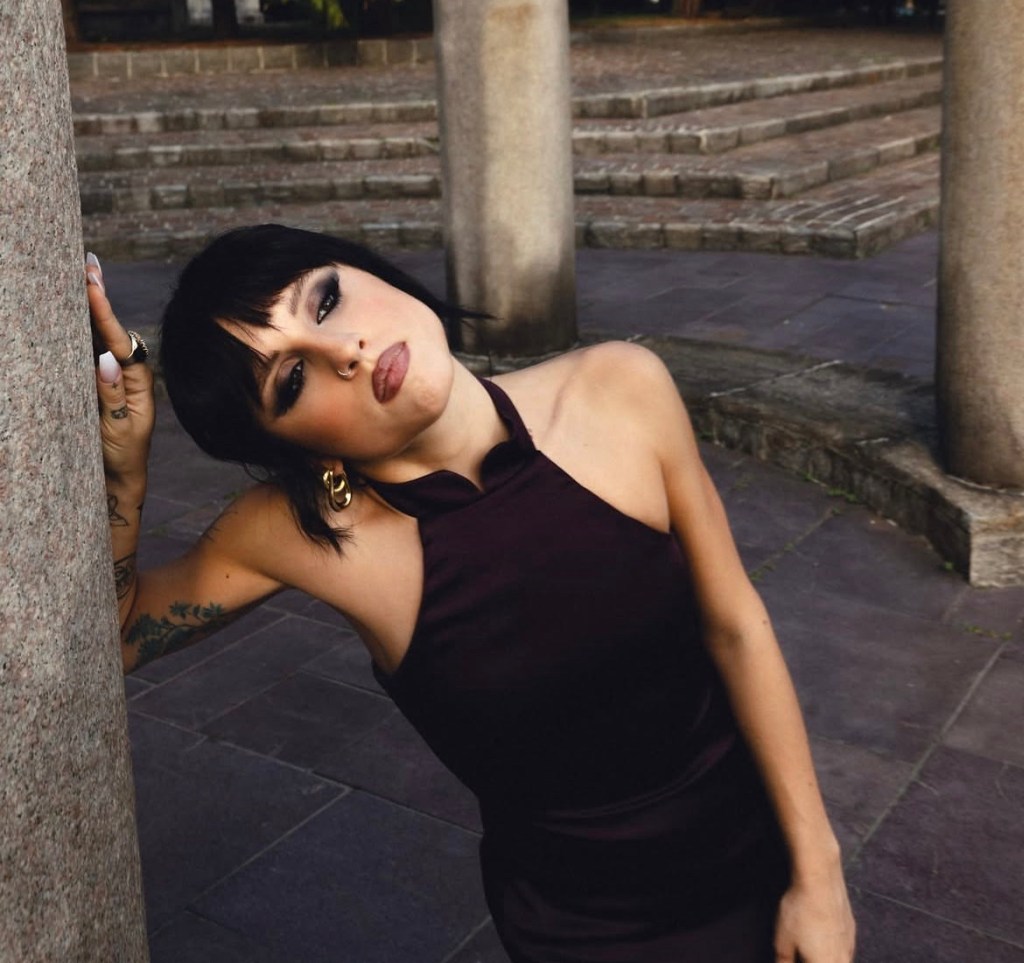
Listening closely to Angelina Mango’s “Tutto all’aria” (Everything Upside Down) and “Vita di adulti” (Adult Life), a profound connection begins to emerge, almost as if the two songs were different chapters of the same story.

We don’t know whether Angelina intentionally created a narrative connection between these songs, but the images, words, and emotions running through them seem to speak to one another.

On one side, we find a girl who feels unprepared to face life. On the other, a young woman who is beginning to accept it, with all its contradictions.

It is the story of growing up — a process that doesn’t happen overnight, but unfolds through doubts, changes, vulnerability, and new awareness.

“Tutto all’aria”: The Fear of Growing Up

In “Tutto all’aria,” Angelina describes a changing life, a love that turns everything upside down, and the struggle to face the responsibilities of adulthood.

At the beginning of the song, a fundamental idea emerges: it’s time to grow up.

There is a house to put in order, responsibilities to face, and matters that seem more important than love.

It’s almost as if adult life is beginning to demand its own space, forcing the protagonist to leave behind the spontaneity of youth.

But growing older doesn’t necessarily mean feeling ready.

Angelina describes how she has changed, how she no longer entirely recognizes the person she was just the day before, yet emotionally she still carries the same innocence.

It is a deeply human contradiction: time makes us grow older, but our hearts don’t always grow at the same pace.

One of the most meaningful moments comes toward the end of the song, when she expresses a simple but powerful desire: she wants to live.

Yet she admits that she doesn’t know the rules of this game called life.

And that is precisely what makes the song so meaningful.

The protagonist wants to experience the world, to love, to make choices, to make mistakes, but she doesn’t yet have the tools to understand everything happening around her.

Love, moreover, becomes something unpredictable: a feeling capable of shaking every certainty and destroying what once seemed solid.

And when something breaks, you have to pick up the pieces.

It’s not a game.

It’s life.

“Vita di adulti”: Learning to Accept Growing Up

In “Vita di adulti,” we seem to meet the same girl again, but with a different kind of awareness.

She isn’t necessarily someone who has found all the answers.

She is someone who is beginning to understand that perhaps having all the answers isn’t essential.

Adult life is not portrayed as a final achievement, but as a condition filled with conflicting emotions.

There is hair growing longer, a new home, small everyday gestures, and even a basil plant that keeps dying.

These are simple, almost ordinary images, yet they become metaphors for something much greater.

Everyday life has entered the protagonist’s world, bringing new responsibilities and a sensitivity that seems to grow stronger.

Everything moves her.

And perhaps that is the most important change: she no longer feels the need to resist every emotion she experiences.

In “Tutto all’aria,” life seems like something slipping beyond her control.

In “Vita di adulti,” however, Angelina seems to begin accepting that not everything can be controlled.

Growing up doesn’t mean becoming less vulnerable.

It means learning how to live with that vulnerability.

The Invisible Thread Connecting the Two Songs

There are several particularly interesting connections between these two songs.

1. Growing Up and Living an Adult Life

In “Tutto all’aria,” growing up appears as a necessity, almost an obligation imposed by life.

In “Vita di adulti,” that same condition is viewed from a different perspective.

The protagonist no longer seems simply frightened by growing older.

She is beginning to discover that there might even be something beautiful about this new stage of life.

It’s almost as if the second song answers the first.

At first, there was the fear of growing up.

Now, there is an attempt to accept everything that comes with it.

2. The House That Needs Fixing and the New Home

This is perhaps one of the most interesting symbolic connections.

In “Tutto all’aria,” there is an image of a house that needs to be put in order.

The house may literally represent everyday responsibilities, but metaphorically, it can also represent life itself.

There is something to organize.

Something to rebuild.

Something that needs to find its place.

In “Vita di adulti,” however, we encounter a new home.

The protagonist is now living inside a different reality, yet she still feels suspended, almost as though she hasn’t completely found her place within it.

It’s almost as if, in the first song, she still needs to build her life, while in the second, she finally finds herself inside that life without quite knowing how to inhabit it.

The house becomes a symbol of transformation.

Having a place to live doesn’t automatically mean feeling at home, just as becoming an adult doesn’t necessarily mean feeling grown up.

3. Love That Breaks Everything and Love That Helps Us Carry On

In “Tutto all’aria,” love appears as a force capable of destabilizing every certainty.

The protagonist allows herself to become completely involved, to the point of emotionally risking everything she has.

When the relationship begins to fall apart, the world she imagined seems to collapse around her.

In “Vita di adulti,” however, love takes on a different meaning.

It is no longer simply something that can turn life upside down.

It also becomes the desire to share the challenges of growing up with someone.

It’s a subtle but important difference.

In the first song, love seems to have the power to destroy emotional stability.

In the second, it may represent the possibility of finding stability through togetherness.

4. Not Knowing the Rules and Accepting Life’s Contradictions

In “Tutto all’aria,” Angelina expresses the desire to live without knowing exactly how to face what lies ahead.

It is the fear of confronting something bigger than yourself.

In “Vita di adulti,” that uncertainty doesn’t seem to have disappeared.

The protagonist continues questioning life, emotions, and what it means to have become a woman.

But her attitude seems different.

She doesn’t necessarily need an explanation for everything anymore.

She is beginning to recognize that life is also made of incomprehensible situations, unexpected emotions, and small everyday failures.

Even a dying basil plant can become a symbol of how difficult it sometimes is to manage responsibilities.

And it is precisely this imperfection that makes the story feel so authentic.

Two Versions of the Same Angelina

If we imagine these two songs as parts of a single journey, something fascinating emerges: an almost imaginary conversation between two versions of the same person.

The Angelina of “Tutto all’aria” seems to be saying:

I want to live, but I still don’t know how.

The Angelina of “Vita di adulti” might answer:

I still don’t know exactly how, but maybe I’m starting to like this life.

After all, becoming an adult doesn’t necessarily mean learning how to control everything.

It means finding the courage to live even when you don’t have all the answers.

It means accepting that some things will fall apart, that certain feelings will change, and that sometimes starting over is unavoidable.

It means understanding that vulnerability and maturity are not opposites.

We can be adults and still feel afraid.

We can build a home and still feel lost.

We can love deeply without knowing how to protect what we love.

And we can be moved by the simplest things, precisely because we have learned to recognize their value.

But Who Is the “You” in “Vita di adulti” Really Addressed To?

There is one more possible interpretation worth exploring.

In “Vita di adulti,” the desire to share adult life with someone could certainly be understood as a declaration of romantic love.

But are we sure that the person being addressed is necessarily a romantic partner?

What if that “you” also represents someone who is no longer here?

Knowing Angelina’s personal story, marked by the loss of her father, Pino Mango, when she was only thirteen years old, this question takes on a particularly emotional meaning.

Of course, we cannot claim that the song is dedicated to him.

That would mean attributing an intention to Angelina that she has not necessarily expressed.

However, from an emotional perspective, this interpretation opens up an interesting possibility.

When you lose someone essential during childhood, growing up also means learning to experience all those moments you wish you could have shared with them.

A new home.

Your first real responsibilities.

The struggles of everyday life.

The moment you suddenly realize that you are no longer a child.

These milestones can make someone’s absence feel even more powerful.

And so, the desire to experience adult life alongside another person might also carry a deeper sense of longing: the wish to have someone important beside you throughout your journey of growing up.

It is a possible interpretation, not a certainty, but it fits within the emotional sensitivity that runs through many of Angelina’s songs.

Conclusion: Growing Up Doesn’t Mean Leaving Your Inner Child Behind

Perhaps the deepest connection between “Tutto all’aria” and “Vita di adulti” isn’t simply about love, homes, or responsibilities.

It’s about the relationship we have with ourselves as we grow older.

In “Tutto all’aria,” we seem to encounter a girl desperately trying to understand the rules of life.

In “Vita di adulti,” we find a woman beginning to accept that those rules are not always clear.

The first is afraid that everything might fall apart.

The second seems to have understood that even the broken pieces somehow belong to our story.

And perhaps this is the beauty of Angelina Mango’s songwriting: her ability to express complex emotions through simple, everyday images in which anyone can recognize themselves.

A house that needs fixing.

A new home.

A love that turns everything upside down.

A plant that keeps dying.

The desire to live.

The fear of growing up.

Two songs that seem to tell one profound truth: becoming an adult doesn’t mean becoming less vulnerable. It means learning to love life even through our own vulnerabilities.

And perhaps, in the end, growing up means exactly that:

Accepting that somewhere inside the woman we have become, the little girl we once were is still alive.

Featured

fragile package song Angelina mango

emotional vulnerability and unbalanced relationships

Beyond the emotional dimension, the song wrote by Angelina, can also be read as a reflection on the world of success and the creative industry, which often turns people into products, demanding constant performance and erasing individual fragility.

In other words:

it’s not just a song about love.

It’s a song about what happens to a sensitive person when they are thrown into a system that is not built for sensitivity.

SONG translation:

And it’s not easy

You say that we are like machines

But in the van, I’m the fragile package

Intact, do I seem intact to you?

So you build castles on me

All of this I can take in

In the room our love is a guest

The one that makes you put everything away and nothing in order

Lonely souls, without resentment

Are souls in the sun, without shame, naked

You talk about love like it’s raw stories

Go ahead, eat them, they’re better raw, raw

I feel that I can do whatever I want and then

To put things back into proportion

I smell bread, houses to breathe in

Always too far away, I grow and I feel them burn

The flames, my legs contracted

Take-away panic and I know

That it’s not easy

You say that we are like machines

But in the van, I’m the fragile package

Intact, do I seem intact to you?

Emotions locked in cages

I peel off my skin so I won’t feel anything (anything)

I say, “Anxiety, now, put it aside”

Obsessions, instead you pretend it’s nothing, nothing

I swear, I try to keep my distance

I soundproof the rooms, then nobody hears me

If my muscles scream, tear them out, look at them

Ignore them well, well

No, no, no, no, no, no, no

And it’s not easy

You say that we are like machines

But in the van, I’m the fragile package

Intact, do I seem intact to you?

So you build castles on me

All of this I can take in

In the room our love is a guest

The one that makes you put everything away and nothing in order

Ah, nothing in order, mhm

Nothing in order, eh, eh

Powerfull song of emotions: We are like machines” vs “I am the fragile package” Here lies the core of everything:

You say that we are like machines But in the van, I’m the fragile package

The other person sees the relationship as something functional, efficient, rational. Angelina, instead, feels carried along, not at the wheel, and above all fragile.

The “van” is a powerful image:

you’re not driving you’re on a journey you’re an object, not a subject

It’s a relationship where one person plans, the other adapts.

“You build castles on me”

So you build castles on me. Here there’s the idea of projections:The other person builds expectations, dreams, roles on your body / your emotional world. You become a surface onto which the other imagines. You are not seen for who you are, but for what you can hold.

Love as a “guest” In the room our love is a guest

The one that makes you put everything away and nothing in order.This is one of the most mature images in the song.

Love:

is not a home is not stable it’s something that passes through

And when it passes:

it seems to fix everything but in reality it solves nothing

It’s a kind of love that gives the illusion of balance, but doesn’t really create it.

Dissociation and emotional anesthesia

The central part is almost clinical:

Emotions locked in cages. I peel off my skin so I won’t feel anything I soundproof the rooms, then nobody hears me

Here we enter a state of:

hyper-control anxiety defense. The voice no longer wants to feel → it numbs itself. It doesn’t run away: it switches off. It’s a form of emotional survival: if I don’t feel, I don’t suffer.

To put things in perspective” (“Per ridimensionare”)

I feel that I can do whatever I want and then.To put things in perspective.Here there’s a very human movement:

a moment of omnipotence (“I can do anything”)followed immediately by the need to set boundaries again, to become small, real.

It’s the moment when you realize that:

you can’t save everything you can’t be everything you can’t carry all of someone else’s castles

Laura

Featured

Angelina Mango part 2

Angelina Mango: Her Journey on Amici

Angelina Mango emerged as one of the brightest stars of the twenty-second edition of Amici di Maria De Filippi, leaving a lasting mark on the Italian music scene.

She entered later in the program of Amici in November 2022, after winning a challenge against Andrea Ascanio. During the auditions, she immediately caught the attention of Arisa and Lorella Cuccarini. She was initially hesitant to participate in Amici because she didn’t see herself as a competitive person and wasn’t accustomed to sharing her personal life with others

She said in an interview 

Competition doesn’t exist much in my head, so finding myself there competing in music was a bit unsettling at first. I had to figure out how to do it without feeling out of place.”  

It was very beautiful, formative on a human level, it was madness. Really, the first madness I did was that, because it was outside my schemes, but it went well, so I would do it again.

Despite her initial reservations, Angelina embraced the experience, which contributed significantly to her personal and artistic growth.

During her time on Amici, Angelina shared deeply emotional moments, such as speaking about the passing of her father, Pino Mango, in 2014. In one episode, she was moved to tears by a video of her father, highlighting how music has always been a fundamental part of her life. Angelina impressed both the public and critics with original songs like Voglia di vivere, Mani vuote, and Ci pensiamo domani. The latter became a summer hit, reaching the Top 10 of the FIMI chart and earning four platinum records. In May 2023, she released the EP Voglia di vivere, which debuted at number two on the FIMI Albums Chart and was certified gold. Moreover, During her time on Amici 22, Angelina Mango performed several cover songs that showcased her versatility and emotional depth like eyes in the Sky, I’ll Never Love Again,Lift Me Up,Don’t Go Yet, new rules, No Roots, Dancing (This performance further solidified Angelina’s reputation as one of the most promising artists of her generation), You Are the Reason,happier than never, and other also italian song. In sole song Angelina Mango wrote her own bars (meaning original lines or verses), especially in assigned songs or reinterpretations like Lunedì, SiriThis highlighted not only her vocal talent but also her skills as a songwriter, one of the qualities that made her stand out in the competition. Her personal writing gave a unique and authentic touch to her performances, setting her apart from the other contestants.

You can See her performance on YouTube some part or whole performance on TikTok.

On Amici, she finished as the overall runner-up but won the singing category, the Critics’ Award, and the Radio Award. In 2024, she went on to win the Sanremo Music Festival with the song La noia, later representing Italy at the Eurovision Song Contest, where she placed seventh.

This is another story

Laura

Make a one-time donation

Your contribution is appreciated.

Donate

Make a monthly donation

Your contribution is appreciated.

Donate monthly

Make a yearly donation

Your contribution is appreciated.

Donate yearly

Growing Up Without Losing the Child Within

The fear of growing up, the need to feel loved, and the search for a safe place. In “Vita da adulti” (Adult Life), Angelina Mango explores the transition into a new chapter of life through everyday images, vulnerability, and disarming sensitivity.

Some songs tell a story, while others seem to open the doors to someone’s life. Angelina Mango’s “Vita da adulti” belongs to the latter.

After the profound introspection of Caramé, Angelina seems to be stepping into a new dimension: that of a woman learning to live with her emotions, her responsibilities, and the fear of losing what she loves.

But does becoming an adult really mean knowing how life works?

Turning on the Lights: Learning to Understand Yourself

The song opens with a seemingly simple image: turning on the lights in an attempt to understand.

It is a beautiful metaphor for self-awareness. Before facing the world, we must learn to look within ourselves, understand who we are, and accept our contradictions.

Angelina wonders how to avoid losing herself, how to like herself, and how to stand out.

Three questions that capture an essential part of growing up: not losing your identity while trying to find your place in the world.

And perhaps this is one of the greatest challenges of adulthood: continuing to recognize yourself, even when everything around you changes.

The Frames: The Desire to Be Seen

Among the song’s most delicate images are the drawings, the paintings, and the picture frames.

A drawing can exist without a frame, but framing it means giving it value, choosing to preserve it and put it on display.

The paintings waiting on the floor thus seem to become a metaphor for the parts of ourselves that long to be recognized.

Not necessarily by the entire world. Sometimes, all we need is one person capable of seeing what we struggle to appreciate in ourselves.

Being loved also means feeling seen and accepted in all our imperfections.

A Safe Place: A Question That Becomes a Certainty

At the beginning, Angelina questions the safety of home, almost doubting whether a place capable of truly protecting us even exists.

Later, however, the same image takes on a different meaning.

Physical closeness, shared silence, and resting one’s forehead against another person’s become representations of emotional security.

No grand declarations are needed.

Home is no longer simply a place made of walls and rooms. It becomes a relationship, a presence, a space where we can finally let our guard down.

And yet, one question remains: how safe can a place really be if we are afraid of losing it?

Crying Like Little Creatures: The Freedom to Be Vulnerable

One of the most powerful moments in the song is when Angelina invites us to leave grown-up conversations behind and return to crying like little creatures.

The choice of the Neapolitan word criature is particularly meaningful.

It does not simply refer to childhood. It evokes innocence, spontaneity, and vulnerability.

As children, we do not necessarily need to justify every emotion. We cry, we laugh, we fall apart, and moments later, we go back to living.

As adults, however, we often feel the need to control everything, even what we feel.

Angelina seems to remind us that growing up does not mean giving up the most spontaneous part of ourselves.

We can become adults without losing the ability to be amazed, to feel deeply, or to cry for no particular reason.

Hair and Flocks of Birds: The Freedom to Change

Then there is the image of long hair moving together with flocks of birds.

Her hair becomes a possible symbol of transformation, of time passing, and of a femininity that is evolving.

The flocks of birds, meanwhile, evoke movement, freedom, and the need to follow a direction, even without knowing exactly where it will lead.

It is almost as if Angelina were observing herself from the outside, surprised by the person she is becoming.

And in the middle of this transformation lies a fascinating paradox: finding a reason even when there apparently is none.

Perhaps this is precisely what growing up means: learning to find meaning even in things we cannot fully explain.

The New Home and the Basil Plant: The Fragility of Everyday Life

One of the most poetic details is the basil plant that keeps dying.

Such a small, almost ordinary image, yet one that carries a much deeper meaning.

Basil is a domestic plant, something we are supposed to care for. It requires attention, consistency, and balance.

And yet, it can die despite our best intentions.

It therefore becomes a possible symbol of the small responsibilities of adulthood, of the things we try to keep alive but cannot always protect.

Alongside this detail appears a new home, where Angelina feels suspended, almost caught between different stages of life.

The house represents a new chapter of existence, but also the disorientation that accompanies every change.

You can have a new home and still not feel completely at home. You can become an adult and still be searching for your balance.

And above all, you can be happy and frightened at the same time.

Love Should Never Become Just a Habit

In the second part of the song, an even more mature reflection emerges: the fear that a relationship might lose its authenticity.

Angelina seems willing to accept even a separation if staying together would mean hurting each other.

It is a form of love that does not seek possession at any cost.

There is also an awareness that routine can turn a love story into something empty, into pages filled without having anything meaningful left to tell.

But there is another possibility: living a story so authentic that there is no need to invent it.

The imagery of drawing returns, this time through the body and its contours.

As if loving someone meant learning every detail of them, until you could recognize and describe them even with your eyes closed.

It is an intimacy built on deep understanding, not merely desire.

The Frame Returns: Holding on to a Moment

Towards the end, the picture frame reappears, but its meaning seems to have changed.

At first, it held drawings waiting to be noticed. Now, it seems to hold a person, a moment, something that she does not want to lose.

Angelina does not demand to know the future, nor does she want to anticipate what will happen.

Instead, she chooses to live in the present, even when it is messy, imperfect, and uncertain.

The frame thus becomes a poetic attempt to freeze a moment without being able to stop time.

We cannot control how long happiness will last, but we can recognize it while we are living it.

“Vita da adulti”: The Beauty of Growing Together

The heart of the song, in my interpretation, lies in the contrast between the desire to become an adult and the desire to remain a childlike creature.

On one side, there are responsibilities, a home to live in, relationships to build, plants to care for, and fears to face.

On the other, there is the need to keep laughing, crying, making mistakes, and being surprised by life.

Angelina does not offer a definitive answer to what it means to grow up.

Instead, she seems to tell us that maturity is not about having everything under control, but about accepting that we cannot control everything.

And love does not erase that uncertainty, but it can make it less frightening.

From Caramé to Vita da adulti: A New Chapter

Listening to Vita da adulti after Caramé, it is difficult not to feel an emotional connection between the two.

If Caramé took us through pain, memory, loss, and the search for identity, this new song seems to open a window onto the present.

It does not mean that every wound has healed or that every question has finally found an answer.

Perhaps it means something even more important: being ready to live without having all the answers.

Angelina’s songwriting continues to find poetry in seemingly insignificant details: a dying plant, a drawing waiting to be framed, a messy home, hair moving in the wind.

These fragments of everyday life become universal because, deep down, they belong to all of us.

And perhaps Vita da adulti leaves us with this very thought:

Growing up does not mean becoming less vulnerable. It means learning to live with our vulnerability, while finding someone with whom we are no longer afraid to show it.

Because sometimes adult life does not become easier.

It simply becomes more beautiful when we have someone to share it with

Song

English translation of first lyric:

Still have to turn on the lights and then understand what you’re saying

When you try to love me

When you start talking to me before falling asleep

And put frames around my drawings

You would hang up the paintings looking for attention

That are waiting on the floor to be noticed

And I remain silent, rushing myself to get back home

A safe place, but when is it safe?

Let’s leave grown-up conversations behind

And cry like little creatures, for no reason

Just to say: ‘What life is this?’”

Listen to a song

“Che bella vita(What a beautiful) life by Ariete and Angelina Mango: growing up, finding each other again, and truly seeing one another

New song by Angelina Mango and Ariete

At first, Che bella vita by Ariete and Angelina Mango may sound like a song built around simple memories and a bright, almost carefree title. But once you pay closer attention to the lyrics, another story begins to emerge.

It is the story of two girls growing into adulthood, of time moving faster than expected, of fearing that an important person might slip away, and of wanting to be truly seen by someone who still recognizes you as life changes you.

Knowing about the bond between Ariete and Angelina also gives some of the song’s images an additional emotional resonance.

This is more than nostalgia for childhood. Che bella vita can be read as a song about becoming an adult while trying not to lose the people and places that once made it possible to be completely yourself.

Returning to a house that no longer feels the same

The first image immediately takes us back in time:

“Ma quanto è piccola sta casa / me la ricordavo più grande”
“This house feels so small / I remembered it being bigger.”

There is something deeply familiar about returning to a childhood place and discovering that it seems smaller than it did in our memories.

Yet perhaps the house has not really changed.

Perhaps we are the ones who have changed.

A room can feel enormous to a child. A familiar road can seem endless, and a summer can feel as though it will last forever. Adulthood changes the scale with which we measure those same things.

So the small house becomes an immediate sign of everything that has happened in between.

There is another reason why beginning with a house feels important. As the song develops, “home” seems capable of becoming more than a physical place.

Sometimes, another person can feel like home.

Barefoot: from childhood freedom to the fear of disappearing

Another recurring image appears almost immediately: bare feet.

Being barefoot belongs naturally to childhood. But as the song moves into adulthood, the same image is associated with a much deeper fear: the possibility of moving through the world without anyone noticing that you are there.

That idea touches one of our most basic emotional needs.

It is not enough simply to be looked at.

We want to be noticed and truly seen.

A person can stand in the middle of a crowd and still feel invisible. Someone can even be known by thousands of people and still wish for one person who sees beyond everything surrounding them.

This is why the presence of the other person matters so much.

Someone did notice her.

The children they once were are suddenly adults

The distance between past and present becomes explicit in one of the song’s most striking lines:

“Le bambine che eravamo sono grandi così in fretta”
“The girls we used to be grew up so quickly.”

This may be one of the clearest keys to the whole song.

Growing up rarely feels like a neat transition. It seems to happen while we are busy living. Then suddenly the children we remember have become adults, carrying responsibilities, fears and lives that may take them in completely different directions.

The world can feel colder too.

People who once seemed inseparable can argue or drift apart. There can be periods when finding one another again feels difficult.

Yet the song holds onto one important idea: waiting for each other.

To wait for someone is to keep a space for them.

It means that the door has not been completely closed.

That may also explain why Che bella vita does not need to place a rigid boundary between friendship and love. Something more fundamental lies underneath both: caring deeply enough about another person to continue recognizing them as time passes.

When even the music needs to stop

One line becomes especially meaningful when we remember that it is being sung by two musicians:

“Spegni la musica per dieci minuti”
“Turn the music off for ten minutes.”

For a few minutes, even music can disappear.

There is no stage, no song and none of the noise that usually surrounds their lives.

There are simply two people.

The line feels like an invitation to remove everything unnecessary and discover what remains underneath.

What seems to remain is their connection.

Others may leave. Circumstances may change. And somewhere between adolescence and adulthood comes that peculiar uncertainty: are we still young, or are we already grown up?

Perhaps the answer is both.

The girls they used to be have not completely disappeared inside the women they are becoming.

“I need you”: the emotional centre of the chorus

Then the chorus finally says openly what the rest of the song has been moving towards:

“Perché ho bisogno di te / come zucchero a prima mattina…. “Because I need you,
like sugar first thing in the morning,
but not before
I’m sure that we’re not just,
that we’re not just drops upon the windows,
railway tracks crossing in a tunnel.She told me last night,
under the covers,
and we start laughing, laughing. What a beautiful life.”

What makes the comparison so effective is its ordinariness.

There is no dramatic promise and no enormous declaration.

There is simply morning sugar.

Something familiar, small and woven into everyday life; something that quietly makes the beginning of a day sweeter.

In that sense, telling someone you need them like this can almost mean:

you have become part of my everyday life, and that ordinary presence is exactly what makes you precious.

Hearing Ariete and Angelina sing those words also makes it difficult not to think about their friendship.

Of course, songs can combine fiction, poetic imagery and universal emotions. For that reason, the lyrics should not automatically be treated as a literal autobiography of the two artists.

Still, knowing that their bond existed before Che bella vita makes this reading particularly compelling.

What if two people are only meant to cross paths?

The tenderness of “I need you” is immediately accompanied by uncertainty.

The chorus brings in images of drops on a window and railway tracks crossing one another.

They suggest movement and impermanence.

Two paths can meet and run close together for some time. Nothing, however, guarantees that they will always continue in the same direction.

That is one of the fears that often appears precisely when somebody becomes important to us. The fear is not only that we might lose them, but that one day we may discover that we were simply a passing chapter in their life.

Will these two people remain connected, or were they only two paths that happened to meet?

The song does not need to resolve that question.

Instead, it gives us something much smaller and more human.

Why “Che bella vita” arrives after a laugh

The two share a private moment. They talk, open up to each other and eventually burst out laughing.

Only then does the title reveal its full emotional meaning:

Che bella vita — what a beautiful life.

It matters that these words do not come after a description of perfection.

By this point the song has already touched on growing up, distance, fear, people leaving and the possibility that two lives may eventually move apart.

But someone is still there to laugh with.

That changes everything.

The feeling is almost: we cannot know what tomorrow will do to us, but right now we are here together.

And in that moment:

What a beautiful life.

Ariete and Angelina: separate journeys that can still meet

Thinking of Ariete and Angelina adds another layer to the image of the railway tracks.

They are two artists following distinct musical and personal paths.

Yet two people do not have to follow an identical route forever in order for their bond to be genuine.

They can have separate experiences. They can grow independently and change in different ways. And they can still recognize each other when their paths meet again.

Seen from this perspective, Che bella vita seems to suggest something particularly beautiful:

loving someone does not mean asking them never to change. It means being capable of recognizing them even after they have changed.

The sea and learning not to fight every wave

Later, the song moves from the house to another powerful setting: the sea.

A memory appears of floating among rough waves, light like a cork.

On the surface, it is an almost childlike picture. Symbolically, however, it can suggest something much larger.

Life, like the sea, does not always remain calm.

We cannot prevent every wave from reaching us, nor can we control everything that happens.

Sometimes survival means learning how to float rather than fighting every movement of the water.

From that memory comes another realization: even the worst day eventually ends.

One terrible day does not automatically make an entire life terrible.

Pain does not necessarily last forever.

And if we spend our whole lives running from what frightens us, we may simply lose even more time.

Bare feet return, but this time something has changed

One of the most beautiful aspects of the song is the way the image from the beginning returns near the end.

Earlier, being barefoot was connected with the fear that nobody would notice the protagonist.

Later, she is walking barefoot again, now along the shore.

But she is no longer in exactly the same emotional place.

Even the sand seems to acknowledge that she is there.

The song therefore seems to complete a circle.

At first, the feeling is:

I’m afraid nobody will notice me.

By the end, it has become:

I’m here, and my presence leaves a trace.

She no longer needs to make noise simply to prove that she exists.

Someone has seen her.

And perhaps an even more important transformation has taken place: she may finally be learning to recognize her own presence in the world.

So what does “Che bella vita” really mean?

Ultimately, Che bella vita does not appear to be saying that a beautiful life is a painless one.

Its message feels much more complex than that.

Growing up can mean returning to the enormous house of your memories and finding it small. It can mean realizing that the girls you once were cannot exist in quite the same way anymore. It can mean discovering that the world is sometimes cold and wondering whether the people you love will eventually leave.

But growing up can also reveal that certain people remain with us in another form.

There are people around whom we can still be barefoot.

People with whom we can switch off the music.

People before whom nothing needs to be proved.

People who notice us.

Perhaps the most moving declaration of affection hidden between the lines is therefore simply:

I noticed you. I truly saw you.

None of us knows exactly where life will lead. Two paths may continue side by side, or they may eventually move in different directions.

But being genuinely seen by another person leaves a mark.

Che bella vita begins inside a house that now seems too small and gradually opens onto a much wider horizon.

Between those two points are two girls who grew up.

Two artists.

Two lives that found each other.

And perhaps the thought that remains when the song is over is this:

some people do not have to stand beside us every moment to continue feeling like home.

When everything else changes and we can still look at each other, recognize each other and laugh together, perhaps nothing more needs to be said.

Che bella vita. What a beautiful life.

https://youtu.be/yWJ7qyYbxyw?is=3niSNfP9Xh4EdeeM

Listen to Angelina and Ariete

The Meaning of “Canto d’amore” – Angelina Mango & Marco Mengoni

To truly understand “Canto d’amore”, it is important to start from one key idea: this is not a traditional love song addressed to one particular person. Above all, it is a song about what it means to be human.

The song revolves around our contradictions: we can be strong and fragile, confident and insecure, perfect and imperfect at the same time. Its message is about embracing who we really are and allowing ourselves the right to make mistakes, without feeling crushed by the constant pressure to be perfect.

The beginning: we are all playing a part

When Angelina talks about the silence outside and then says that we are “great actors,” she introduces one of the song’s central themes: the distance between who we truly are and what we choose to show others.

We create stories so that we do not disappear, we make mistakes in order to learn, and we create things because we want to be seen. In this sense, music itself becomes a way of leaving something behind: when everything else fades away, something of what we have expressed may remain.

“But tell me, what do you do with all this pain?”

This is one of the most important questions in the song.

Pain is neither denied nor romanticized. Instead, the question becomes: once the pain exists, what are you going to do with it?

You can allow it to consume you, or you can transform it into something else: awareness, connection with others, music, love.

“Even if the earth is shaking…”

Here, the relationship with another person comes into focus. It does not necessarily have to be romantic love: it could be someone you love, or simply someone who chooses to stay beside you.

The image is that of an unstable world while someone tells another person: I am here; you can let yourself go.

Then comes a beautiful paradox: having only a thin, fragile voice left and still wanting to scream everything you have never managed to say.

Fragility, therefore, does not prevent us from being strong. The two can exist together.

A society built on appearances

In the second part, Angelina deliberately introduces very contemporary images. People say that you should never judge a book by its cover, while at the same time judging someone simply by scrolling through their profile.

It is an almost ironic contradiction: we claim that appearances should not matter, while constantly living through them and judging others by them.

And this is exactly the opposite of the song’s deeper message: we need to stop demanding perfection from ourselves and from other people.

“I took a bite out of life”

This line becomes even more meaningful when considered within the journey of caramé, as it echoes the idea expressed elsewhere in the album that life must be bitten into, experienced fully rather than observed from a distance.

This is why Canto d’amore can almost be interpreted as the final destination of the journey that began with caramé.

Throughout caramé, Angelina explores her inner conflict, vulnerability, pain, feelings of inadequacy and the need to rediscover herself.

Here, however, she seems to reach a different conclusion:

Life does not have to be perfect in order to be worth living.

It can be harsh. It can hurt. We can make mistakes.

And yet it is still worth taking a bite out of it.

Why it ultimately becomes a true “song of love”

The title therefore acquires a much broader meaning than romantic love.

It is about love for ourselves, love for others and even love for an imperfect life.

And it is significant that, towards the end, the song becomes collective and choral: it is no longer just Angelina and Marco. Their voices merge with the voices of others.

The personal experience becomes universal.

That is why the overall meaning of Canto d’amore could be summed up like this:

“Canto d’amore” is about the moment when we stop trying to be perfect and simply choose to be human. We accept that we can be strong and fragile, that we can make mistakes, suffer and be afraid. And from that pain, something capable of saving us can emerge: the ability to love — to love others, to love ourselves, and even to love this imperfect life.

And this is precisely why the song can be seen as an ideal epilogue to caramé: not because it erases everything that came before, but because it transforms that vulnerability into acceptance.

Carame Angelina mango album

Canto d’Amore (sing of love) The Authentic Duet Winning the Hearts of Critics and Fans

The release of Canto d’Amore ( song of love), the new single by Angelina Mango and Marco Mengoni, has received an overwhelmingly positive response from music critics. Far from following the predictable formula of a typical summer hit, the song has been praised for its authenticity and its ability to blend tradition and modernity into a unique musical experience.

One of the most appreciated aspects is the artistic choice made by both singers to focus on an emotional and meaningful track rather than creating a song designed solely for radio success. Many reviewers have highlighted how Canto d’Amore conveys sincerity and artistic identity—qualities that are becoming increasingly rare in today’s music industry.

The song’s sound has also earned widespread acclaim. Critics have noted its Mediterranean and folk-inspired influences, which are seamlessly combined with contemporary production. This fusion creates a distinctive and recognizable musical identity that sets the track apart from current pop releases.

Among the song’s most celebrated features are its powerful choral sections, which many critics consider the emotional core of the track. The use of collective vocals strengthens the song’s message and creates a sense of unity, transforming the duet into something larger and more communal.

The lyrics have also been widely praised for addressing themes such as vulnerability, self-acceptance, imperfection, and personal growth. The message is seen as universal, resonating with listeners across different generations.

Finally, reviewers have emphasized the remarkable artistic chemistry between Angelina Mango and Marco Mengoni. Their voices, while distinct, complement each other beautifully, adding depth, emotion, and authenticity to the performance.

In summary, Canto d’Amore is being described as a mature, genuine, and original song that stands out for its emotional depth, musical quality, and the success of this highly appreciated collaboration between two of Italy’s most talented artists.

I consider Canto d’Amore the natural final act of the journey that began with Angelina Mango’s artistic path, and one of the songs that best encapsulates the essence of her message started in carame album.In this track, I find the core themes that have always defined her work: self-acceptance, the courage to live with pain, and the understanding that making mistakes is an inevitable part of being human.

The song feels like the closing chapter of a quiet rebellion against a society that demands perfection from us at all times—a world where success, appearance, and physical perfection often seem to matter more than authenticity and emotional truth. Finally Canto d’Amore is a song about contrasts and contradictions. It explores how human beings can be both perfect and imperfect, confident and insecure, all at the same time. The song speaks to the need to embrace one’s true self, to allow ourselves to make mistakes without guilt or shame, and to let go of the relentless pursuit of perfection that society constantly demands. Ultimately, it is a celebration of what it means to be fully human.

For me, this is what makes the song so powerful: it transforms fragility into strength and reminds us that our imperfections are not something to hide, but something that connects us all.

Chorus

It’s not a love song that you’ll dedicate to me
Just the fleeting life of a flower
But tell me, what will you do with all this pain?
Even if the earth is trembling, at least don’t you tremble
Gently, let yourself go
Go on, and as long as I still have a thread of voice
I will shout the words
That you don’t know
That I never told you
The words of a love song
Of a love song

Link for song

Angelina Mango Just Put Into Words What an Entire Generation Feels igloo song

The music of Angelina Mango explores fragility, identity, and emotional growth through poetic and deeply human lyrics.

“Between Me and You, There’s Me Too”

There are songs you don’t just listen to.
You live through them.

The music of Angelina Mango has this effect: it slowly gets under your skin and manages to express emotions we often can’t even explain to ourselves.

In this song, every word seems to speak about growth, loneliness, fear, and identity.
About that exact moment in life when you stop pretending to be okay and finally start listening to yourself.


“I’d rather not understand anything.”

Such a simple sentence, yet devastating.

Because growing up also means this:
realizing that understanding too much can hurt.

We are taught that maturity means having answers.
But the truth is that sometimes it simply means learning how to live with the questions.


Living “Inside an Igloo”

The image of the igloo is one of the most powerful in the song.

Cold.
Silence.
Distance.

It becomes the perfect metaphor for those days when we feel disconnected from the world while everything outside keeps moving so fast.

And then comes this incredible image:

“The northern lights run without getting hurt.”

As if something pure, free, and luminous could still exist — something capable of moving through pain without being destroyed by it.


Fragility Is Not Weakness

One of the strongest lines is:

“Between me and you, there’s me too.”

Because many people spend their entire lives trying to become enough:
strong enough, loved enough, important enough.

And in the process, they forget themselves.

This song reminds us of something essential:
you cannot truly love anything if you keep standing apart from your own life.


We Only Have Time

Maybe the heart of the song is all here:

“We only have time. The secret ingredient.”

In a world constantly pushing us to run faster, achieve more, and prove ourselves, this line feels like a gentle slap to the soul.

In the end, what remains are the moments we truly lived.
The honest emotions.
The people who made us feel a little less alone.


Why Does This Song Hit So Deeply?

Because it doesn’t try to sound perfect.
It sounds human.

It speaks about anxiety, identity, emotional exhaustion, and the need to belong through poetic yet deeply real imagery.

And this is probably why so many people connect with the songs of Angelina Mango:
they feel understood.

Translation song: Igloo

You’ll understand
When you grow up, you’ll understand
That all this mess actually meant something
You’ll understand how beautiful it was
I would rather not understand anything

Beautiful and foolish
But living in the present

It’s already Wednesday
Another exhausting week
One of those without anger
The kind that doesn’t hurt anymore
Falling asleep on thorns
Like on a hospital bed

But what pain when I bite my cheeks hard
When I stay apart from myself, mmh-mmh-mmh

Today I live inside an igloo
And the northern lights run without getting hurt
Between me and you
Yes, between me and you
There’s me too

A tiny dot among the people
Who pretend to be the protagonist
The trailblazer, the life of the party
But tell that to someone who can’t handle it
Someone who doesn’t know how to live in the present
Who simply waits
And says, “Where are you going?”

We only have time
The secret ingredient
If you had told me that a few years ago
Leaving me a drawing
I would have lived it better

And instead I bite my cheeks
While I stay apart from myself, oh-oh-oh-oh

Today I live inside an igloo
And the northern lights run without getting hurt
Between me and you
Yes, between me and you
There’s me too, oh-oh-oh, oh-oh-oh, oh

Angelina Mango

We Missed the Ending ( Ci siamo persi la fine) Angelina Mango.Grief That Grows With You

“We Missed the Ending” is not just a love song.
It’s a song about grief — but not the immediate kind.
It’s about the kind that comes later, as you grow up.

Angelina Mango wrote this song ten years after the death of her father, Pino Mango.
And in those ten years, something happens that we rarely talk about:
grief changes shape.

At thirteen, you don’t really understand what you’re losing.
You only know that something has broken.

“maybe at thirteen you don’t know what love is”

Read this way, the line becomes devastating.
It’s no longer about teenage love,
but about a love that was interrupted too soon.
Something you didn’t have time to fully understand.

“We missed the ending” takes on a different meaning:
there was no real closure,
no conscious goodbye.

The ending came too fast.
And she simply wasn’t fully there yet.

For years, that pain stays suspended.
It transforms, hides, numbs itself.

“now I want to feel all the pain from before”

This is where the song becomes adult.
It’s no longer about escaping, but choosing:
choosing to feel the pain instead of avoiding it.

And then comes the most powerful line:

“ten years later, I let you go”

It’s not about forgetting.
It’s not about stopping loving.

It’s something much harder:
truly accepting the loss.

Letting go of someone you’ve already lost
means stopping living in the “unfinished”,
in that ending you never got to experience.

As the song is copyrighted, I’m only including a short translated excerpt

There’s no time to waste
We can’t get off this ride anymore
We just can’t get off
If I move closer to myself
I drift away from you again — you who feel like air
And up there, in the wind, it feels so good, so good
I wish I had talked to you about love, talked to you about me
About my first times, made you mad in the middle of the night

We could have traveled together, seen the world together
Instead, I walked out of school with wine-red eyes
And I always felt

growing lonelier, more real than ever, more and more young.

…….

Final thoughts

In the end, “We Missed the Ending” isn’t just about loss — it’s about what comes after it.

It’s about growing up with something unfinished inside you.
About realizing, years later, that some endings never really happened —
and that you have to create them yourself.

Letting go after ten years isn’t forgetting.
It’s choosing to stop living in what could have been.

It’s accepting the pain, feeling it fully,
and finally allowing yourself to move forward.

Because sometimes, the real ending
is the one you find the courage to face
long after everything is already over.

Laura

Veil Over My Eyes Meaning

What does “Veil Over My Eyes” by Angelina Mango really mean?

This emotional song explores pain, confusion, and the difficult journey of self-discovery. It’s not just about a relationship — it’s about the moment when you realize you haven’t been honest with yourself.


What does “veil over my eyes” mean?

The phrase “veil over my eyes” is a powerful metaphor.

It represents emotional blindness — the inability to see reality clearly, even when the truth is right in front of you.

Sometimes, we ignore our feelings.
Sometimes, we pretend everything is fine.

Until one day, we can’t anymore.


A song about emotional pain and denial

One of the core meanings of “Veil Over My Eyes” is the realization of self-inflicted pain.

The song suggests that:

  • we often ignore warning signs
  • we silence our inner voice
  • we keep going even when something feels wrong

And then comes the moment when everything becomes clear — and it hurts.


Why this song feels so relatable

The reason why Angelina Mango connects with so many listeners is her vulnerability.

There’s no filter.
No perfect image.

Just raw emotion.

This makes the song deeply personal for anyone who has ever felt lost or disconnected from themselves.


The turning point: wanting to live again

“Now I just want to live”

This line represents the emotional turning point of the song.

After confusion and pain, something shifts.

There is a desire to:

  • feel again
  • be present
  • stop pretending

It’s no longer about surviving — it’s about truly living.


The deeper meaning: healing and growth

At its core, “Veil Over My Eyes” is about transformation.

The song shows that:

  • pain leads to awareness
  • awareness leads to change
  • change leads to growth

The “veil” doesn’t stay forever.

It eventually falls — and when it does, everything becomes clearer.


Final meaning of the song

So, what is the real meaning of “Veil Over My Eyes”?

It’s about facing yourself for the first time.

It’s about recognizing your mistakes, your emotions, and your truth.

It’s painful.
But it’s also the beginning of something new.

Because clarity, even when it hurts,
is the first step toward becoming stronger.


Velo sugli occhi (veil over my eyes) Song Angelina Mango emotional, growth and rebirth

this song that explores deep themes such as emotional pain, personal growth, and rebirth. The track tells the story of the difficulty of overcoming a past relationship and the sense of inner confusion, represented by the metaphor of the “veil over the eyes,” which symbolizes the inability to clearly see oneself and reality.

At the same time, the song expresses a strong desire for change: through vulnerability and the acceptance of one’s flaws, a journey of self-awareness and the will to fully live again emerges.

Song:

Now how do I tell my best friend
That I got hurt, I didn’t listen to him until I lost my hearing?
How do I tell the lady at the bakery
Who asks me if I’m okay, why I’m not smiling today?
Even if I smile, I laugh
You say there’s a veil over my eyes, eyes
But I won’t break until you touch me
Until you touch me

Sugar threads hanging from the ceiling
They’re the curtain of my labyrinth
Maybe this is the end of my first act, ah-ah-ah
Now I just want to live, uh-uh-uh-uh-ah
Now I just want to live, uh-uh-uh-uh
Now I just want to
Now, now, hey
Now I just want to
Now, now, now

Now how do I tell Angelina?
She should have forgiven herself, she became a killer
She walks with rounded tips forever, by flaw
And giving everything isn’t the same as receiving love

And I’ll play with my cards on the table
I won’t lie anymore
And I’ll become a strong woman
But while I open and close the fridge, fridge
You say there’s a veil over my eyes, eyes
Like brides in front of mirrors, in front of mirrors

Sugar threads hanging from the ceiling
They’re the ending of my first act
Now I just want to live, uh-uh-uh-uh-ah
Now I just want to live, uh-uh-uh-uh

Now I want to wake up at four
Mess everything up and then
Die of boredom
And I want to go out in slippers
Do a thousand stupid things I haven’t done yet

I want to scream at a concert
But without the fear that silence will come after
I want to touch my body and feel that I exist
Inside every flaw, inside every flaw

Ah-ah-ah-ah, ah-ah-ah, mmh, now I just want to
Now I just want to live

7up ( Angelina song) I’m Not a Star meaning

7UP in my pocket and my waistline low

I swear there’s a mini crop top

Under this shirt that isn’t even my size

Eyes on me

And no one really sees me

From “do what’s right” to get over it

If I take up less space, there’s less pain

A vacuum-sealed package

Like they sucked the love out of me

I’m not a star

Not even by accident

I’m a freshman for life

With a top-grade kind of life

I’m not a trendsetter

I like playing cards, tressette

Red Algida chairs

Running far away in a camper

7UP in my pocket, if it’s true it helps

I swear I’ll tattoo your names

Down along my legs because

Alone I don’t walk and I can’t breathe

It’s not the applause

It’s not the bow

It’s the courage to show weakness

And accept love without feeling in debt anymore

So much love and freeloading feel the same

And I thought I could pay for everything

Now I’ve realized

I’m not a star

Not even by accident

I’m a freshman for life

With a top-grade kind of life

I’m not a trendsetter

I like playing cards, tressette

Red Algida chairs

Running far away in a camper, mhm

A name, a gossip show

I just want it to pass

I’m not a star, uh-uh

I’m not a star

(Not even by accident)

I’m a freshman for life (for life), ah

I’m not a star

(Not even by accident)

Conclusion:

I’m Not a Star” tells what it feels like to be invisible even when you’re in plain sight. It reflects on vulnerability, on the need to take up less space to avoid pain, and on the difficulty of accepting love without feeling indebted. The repetition of “I’m not a star” is not just a rejection of success, but a statement of identity: you don’t have to shine to have value. The song speaks to those who feel like they’re always a “freshman,” always one step behind, yet still searching for their place in the world.In the end, the real message is this: learning to accept love without having to pay it back, and finding courage in your own vulnerability.