Featured

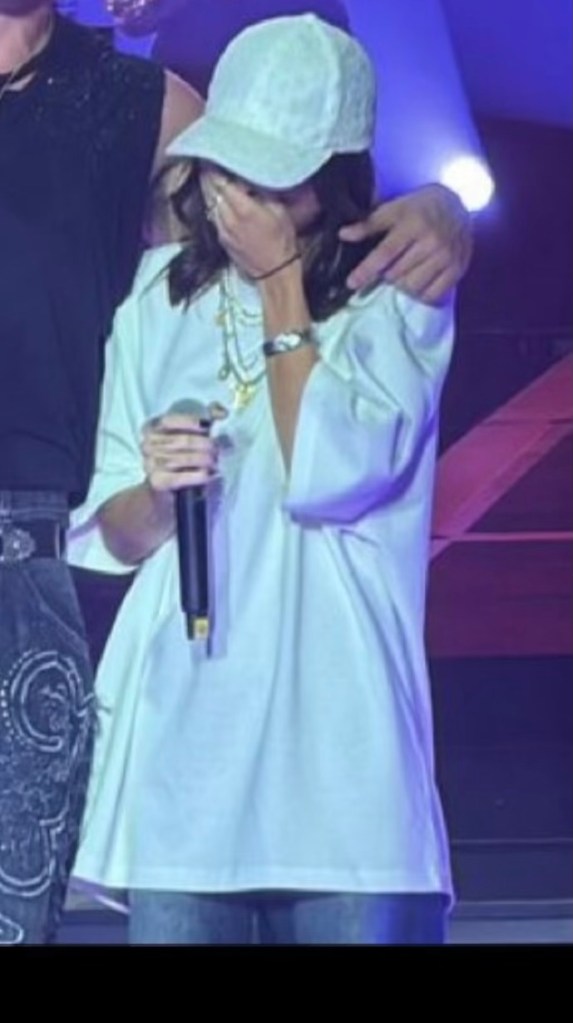
fragile package song Angelina mango

emotional vulnerability and unbalanced relationships

Beyond the emotional dimension, the song wrote by Angelina, can also be read as a reflection on the world of success and the creative industry, which often turns people into products, demanding constant performance and erasing individual fragility.

In other words:

it’s not just a song about love.

It’s a song about what happens to a sensitive person when they are thrown into a system that is not built for sensitivity.

SONG translation:

And it’s not easy

You say that we are like machines

But in the van, I’m the fragile package

Intact, do I seem intact to you?

So you build castles on me

All of this I can take in

In the room our love is a guest

The one that makes you put everything away and nothing in order

Lonely souls, without resentment

Are souls in the sun, without shame, naked

You talk about love like it’s raw stories

Go ahead, eat them, they’re better raw, raw

I feel that I can do whatever I want and then

To put things back into proportion

I smell bread, houses to breathe in

Always too far away, I grow and I feel them burn

The flames, my legs contracted

Take-away panic and I know

That it’s not easy

You say that we are like machines

But in the van, I’m the fragile package

Intact, do I seem intact to you?

Emotions locked in cages

I peel off my skin so I won’t feel anything (anything)

I say, “Anxiety, now, put it aside”

Obsessions, instead you pretend it’s nothing, nothing

I swear, I try to keep my distance

I soundproof the rooms, then nobody hears me

If my muscles scream, tear them out, look at them

Ignore them well, well

No, no, no, no, no, no, no

And it’s not easy

You say that we are like machines

But in the van, I’m the fragile package

Intact, do I seem intact to you?

So you build castles on me

All of this I can take in

In the room our love is a guest

The one that makes you put everything away and nothing in order

Ah, nothing in order, mhm

Nothing in order, eh, eh

Powerfull song of emotions: We are like machines” vs “I am the fragile package” Here lies the core of everything:

You say that we are like machines But in the van, I’m the fragile package

The other person sees the relationship as something functional, efficient, rational. Angelina, instead, feels carried along, not at the wheel, and above all fragile.

The “van” is a powerful image:

you’re not driving you’re on a journey you’re an object, not a subject

It’s a relationship where one person plans, the other adapts.

“You build castles on me”

So you build castles on me. Here there’s the idea of projections:The other person builds expectations, dreams, roles on your body / your emotional world. You become a surface onto which the other imagines. You are not seen for who you are, but for what you can hold.

Love as a “guest” In the room our love is a guest

The one that makes you put everything away and nothing in order.This is one of the most mature images in the song.

Love:

is not a home is not stable it’s something that passes through

And when it passes:

it seems to fix everything but in reality it solves nothing

It’s a kind of love that gives the illusion of balance, but doesn’t really create it.

Dissociation and emotional anesthesia

The central part is almost clinical:

Emotions locked in cages. I peel off my skin so I won’t feel anything I soundproof the rooms, then nobody hears me

Here we enter a state of:

hyper-control anxiety defense. The voice no longer wants to feel → it numbs itself. It doesn’t run away: it switches off. It’s a form of emotional survival: if I don’t feel, I don’t suffer.

To put things in perspective” (“Per ridimensionare”)

I feel that I can do whatever I want and then.To put things in perspective.Here there’s a very human movement:

a moment of omnipotence (“I can do anything”)followed immediately by the need to set boundaries again, to become small, real.

It’s the moment when you realize that:

you can’t save everything you can’t be everything you can’t carry all of someone else’s castles

Laura

Featured

Angelina Mango part 2

Angelina Mango: Her Journey on Amici

Angelina Mango emerged as one of the brightest stars of the twenty-second edition of Amici di Maria De Filippi, leaving a lasting mark on the Italian music scene.

She entered later in the program of Amici in November 2022, after winning a challenge against Andrea Ascanio. During the auditions, she immediately caught the attention of Arisa and Lorella Cuccarini. She was initially hesitant to participate in Amici because she didn’t see herself as a competitive person and wasn’t accustomed to sharing her personal life with others

She said in an interview 

Competition doesn’t exist much in my head, so finding myself there competing in music was a bit unsettling at first. I had to figure out how to do it without feeling out of place.”  

It was very beautiful, formative on a human level, it was madness. Really, the first madness I did was that, because it was outside my schemes, but it went well, so I would do it again.

Despite her initial reservations, Angelina embraced the experience, which contributed significantly to her personal and artistic growth.

During her time on Amici, Angelina shared deeply emotional moments, such as speaking about the passing of her father, Pino Mango, in 2014. In one episode, she was moved to tears by a video of her father, highlighting how music has always been a fundamental part of her life. Angelina impressed both the public and critics with original songs like Voglia di vivere, Mani vuote, and Ci pensiamo domani. The latter became a summer hit, reaching the Top 10 of the FIMI chart and earning four platinum records. In May 2023, she released the EP Voglia di vivere, which debuted at number two on the FIMI Albums Chart and was certified gold. Moreover, During her time on Amici 22, Angelina Mango performed several cover songs that showcased her versatility and emotional depth like eyes in the Sky, I’ll Never Love Again,Lift Me Up,Don’t Go Yet, new rules, No Roots, Dancing (This performance further solidified Angelina’s reputation as one of the most promising artists of her generation), You Are the Reason,happier than never, and other also italian song. In sole song Angelina Mango wrote her own bars (meaning original lines or verses), especially in assigned songs or reinterpretations like Lunedì, SiriThis highlighted not only her vocal talent but also her skills as a songwriter, one of the qualities that made her stand out in the competition. Her personal writing gave a unique and authentic touch to her performances, setting her apart from the other contestants.

You can See her performance on YouTube some part or whole performance on TikTok.

On Amici, she finished as the overall runner-up but won the singing category, the Critics’ Award, and the Radio Award. In 2024, she went on to win the Sanremo Music Festival with the song La noia, later representing Italy at the Eurovision Song Contest, where she placed seventh.

This is another story

Laura

Canto d’Amore (sing of love) The Authentic Duet Winning the Hearts of Critics and Fans

The release of Canto d’Amore ( song of love), the new single by Angelina Mango and Marco Mengoni, has received an overwhelmingly positive response from music critics. Far from following the predictable formula of a typical summer hit, the song has been praised for its authenticity and its ability to blend tradition and modernity into a unique musical experience.

One of the most appreciated aspects is the artistic choice made by both singers to focus on an emotional and meaningful track rather than creating a song designed solely for radio success. Many reviewers have highlighted how Canto d’Amore conveys sincerity and artistic identity—qualities that are becoming increasingly rare in today’s music industry.

The song’s sound has also earned widespread acclaim. Critics have noted its Mediterranean and folk-inspired influences, which are seamlessly combined with contemporary production. This fusion creates a distinctive and recognizable musical identity that sets the track apart from current pop releases.

Among the song’s most celebrated features are its powerful choral sections, which many critics consider the emotional core of the track. The use of collective vocals strengthens the song’s message and creates a sense of unity, transforming the duet into something larger and more communal.

The lyrics have also been widely praised for addressing themes such as vulnerability, self-acceptance, imperfection, and personal growth. The message is seen as universal, resonating with listeners across different generations.

Finally, reviewers have emphasized the remarkable artistic chemistry between Angelina Mango and Marco Mengoni. Their voices, while distinct, complement each other beautifully, adding depth, emotion, and authenticity to the performance.

In summary, Canto d’Amore is being described as a mature, genuine, and original song that stands out for its emotional depth, musical quality, and the success of this highly appreciated collaboration between two of Italy’s most talented artists.

I consider Canto d’Amore the natural final act of the journey that began with Angelina Mango’s artistic path, and one of the songs that best encapsulates the essence of her message started in carame album.In this track, I find the core themes that have always defined her work: self-acceptance, the courage to live with pain, and the understanding that making mistakes is an inevitable part of being human.

The song feels like the closing chapter of a quiet rebellion against a society that demands perfection from us at all times—a world where success, appearance, and physical perfection often seem to matter more than authenticity and emotional truth. Finally Canto d’Amore is a song about contrasts and contradictions. It explores how human beings can be both perfect and imperfect, confident and insecure, all at the same time. The song speaks to the need to embrace one’s true self, to allow ourselves to make mistakes without guilt or shame, and to let go of the relentless pursuit of perfection that society constantly demands. Ultimately, it is a celebration of what it means to be fully human.

For me, this is what makes the song so powerful: it transforms fragility into strength and reminds us that our imperfections are not something to hide, but something that connects us all.

Chorus

It’s not a love song that you’ll dedicate to me
Just the fleeting life of a flower
But tell me, what will you do with all this pain?
Even if the earth is trembling, at least don’t you tremble
Gently, let yourself go
Go on, and as long as I still have a thread of voice
I will shout the words
That you don’t know
That I never told you
The words of a love song
Of a love song

Link for song

Angelina Mango Just Put Into Words What an Entire Generation Feels igloo song

The music of Angelina Mango explores fragility, identity, and emotional growth through poetic and deeply human lyrics.

“Between Me and You, There’s Me Too”

There are songs you don’t just listen to.
You live through them.

The music of Angelina Mango has this effect: it slowly gets under your skin and manages to express emotions we often can’t even explain to ourselves.

In this song, every word seems to speak about growth, loneliness, fear, and identity.
About that exact moment in life when you stop pretending to be okay and finally start listening to yourself.


“I’d rather not understand anything.”

Such a simple sentence, yet devastating.

Because growing up also means this:
realizing that understanding too much can hurt.

We are taught that maturity means having answers.
But the truth is that sometimes it simply means learning how to live with the questions.


Living “Inside an Igloo”

The image of the igloo is one of the most powerful in the song.

Cold.
Silence.
Distance.

It becomes the perfect metaphor for those days when we feel disconnected from the world while everything outside keeps moving so fast.

And then comes this incredible image:

“The northern lights run without getting hurt.”

As if something pure, free, and luminous could still exist — something capable of moving through pain without being destroyed by it.


Fragility Is Not Weakness

One of the strongest lines is:

“Between me and you, there’s me too.”

Because many people spend their entire lives trying to become enough:
strong enough, loved enough, important enough.

And in the process, they forget themselves.

This song reminds us of something essential:
you cannot truly love anything if you keep standing apart from your own life.


We Only Have Time

Maybe the heart of the song is all here:

“We only have time. The secret ingredient.”

In a world constantly pushing us to run faster, achieve more, and prove ourselves, this line feels like a gentle slap to the soul.

In the end, what remains are the moments we truly lived.
The honest emotions.
The people who made us feel a little less alone.


Why Does This Song Hit So Deeply?

Because it doesn’t try to sound perfect.
It sounds human.

It speaks about anxiety, identity, emotional exhaustion, and the need to belong through poetic yet deeply real imagery.

And this is probably why so many people connect with the songs of Angelina Mango:
they feel understood.

Translation song: Igloo

You’ll understand
When you grow up, you’ll understand
That all this mess actually meant something
You’ll understand how beautiful it was
I would rather not understand anything

Beautiful and foolish
But living in the present

It’s already Wednesday
Another exhausting week
One of those without anger
The kind that doesn’t hurt anymore
Falling asleep on thorns
Like on a hospital bed

But what pain when I bite my cheeks hard
When I stay apart from myself, mmh-mmh-mmh

Today I live inside an igloo
And the northern lights run without getting hurt
Between me and you
Yes, between me and you
There’s me too

A tiny dot among the people
Who pretend to be the protagonist
The trailblazer, the life of the party
But tell that to someone who can’t handle it
Someone who doesn’t know how to live in the present
Who simply waits
And says, “Where are you going?”

We only have time
The secret ingredient
If you had told me that a few years ago
Leaving me a drawing
I would have lived it better

And instead I bite my cheeks
While I stay apart from myself, oh-oh-oh-oh

Today I live inside an igloo
And the northern lights run without getting hurt
Between me and you
Yes, between me and you
There’s me too, oh-oh-oh, oh-oh-oh, oh

Angelina Mango

We Missed the Ending ( Ci siamo persi la fine) Angelina Mango.Grief That Grows With You

“We Missed the Ending” is not just a love song.
It’s a song about grief — but not the immediate kind.
It’s about the kind that comes later, as you grow up.

Angelina Mango wrote this song ten years after the death of her father, Pino Mango.
And in those ten years, something happens that we rarely talk about:
grief changes shape.

At thirteen, you don’t really understand what you’re losing.
You only know that something has broken.

“maybe at thirteen you don’t know what love is”

Read this way, the line becomes devastating.
It’s no longer about teenage love,
but about a love that was interrupted too soon.
Something you didn’t have time to fully understand.

“We missed the ending” takes on a different meaning:
there was no real closure,
no conscious goodbye.

The ending came too fast.
And she simply wasn’t fully there yet.

For years, that pain stays suspended.
It transforms, hides, numbs itself.

“now I want to feel all the pain from before”

This is where the song becomes adult.
It’s no longer about escaping, but choosing:
choosing to feel the pain instead of avoiding it.

And then comes the most powerful line:

“ten years later, I let you go”

It’s not about forgetting.
It’s not about stopping loving.

It’s something much harder:
truly accepting the loss.

Letting go of someone you’ve already lost
means stopping living in the “unfinished”,
in that ending you never got to experience.

As the song is copyrighted, I’m only including a short translated excerpt

There’s no time to waste
We can’t get off this ride anymore
We just can’t get off
If I move closer to myself
I drift away from you again — you who feel like air
And up there, in the wind, it feels so good, so good
I wish I had talked to you about love, talked to you about me
About my first times, made you mad in the middle of the night

We could have traveled together, seen the world together
Instead, I walked out of school with wine-red eyes
And I always felt

growing lonelier, more real than ever, more and more young.

…….

Final thoughts

In the end, “We Missed the Ending” isn’t just about loss — it’s about what comes after it.

It’s about growing up with something unfinished inside you.
About realizing, years later, that some endings never really happened —
and that you have to create them yourself.

Letting go after ten years isn’t forgetting.
It’s choosing to stop living in what could have been.

It’s accepting the pain, feeling it fully,
and finally allowing yourself to move forward.

Because sometimes, the real ending
is the one you find the courage to face
long after everything is already over.

Laura

Veil Over My Eyes Meaning – Angelina Mango Song Explained

What does “Veil Over My Eyes” by Angelina Mango really mean?

This emotional song explores pain, confusion, and the difficult journey of self-discovery. It’s not just about a relationship — it’s about the moment when you realize you haven’t been honest with yourself.


What does “veil over my eyes” mean?

The phrase “veil over my eyes” is a powerful metaphor.

It represents emotional blindness — the inability to see reality clearly, even when the truth is right in front of you.

Sometimes, we ignore our feelings.
Sometimes, we pretend everything is fine.

Until one day, we can’t anymore.


A song about emotional pain and denial

One of the core meanings of “Veil Over My Eyes” is the realization of self-inflicted pain.

The song suggests that:

  • we often ignore warning signs
  • we silence our inner voice
  • we keep going even when something feels wrong

And then comes the moment when everything becomes clear — and it hurts.


Why this song feels so relatable

The reason why Angelina Mango connects with so many listeners is her vulnerability.

There’s no filter.
No perfect image.

Just raw emotion.

This makes the song deeply personal for anyone who has ever felt lost or disconnected from themselves.


The turning point: wanting to live again

“Now I just want to live”

This line represents the emotional turning point of the song.

After confusion and pain, something shifts.

There is a desire to:

  • feel again
  • be present
  • stop pretending

It’s no longer about surviving — it’s about truly living.


The deeper meaning: healing and growth

At its core, “Veil Over My Eyes” is about transformation.

The song shows that:

  • pain leads to awareness
  • awareness leads to change
  • change leads to growth

The “veil” doesn’t stay forever.

It eventually falls — and when it does, everything becomes clearer.


Final meaning of the song

So, what is the real meaning of “Veil Over My Eyes”?

It’s about facing yourself for the first time.

It’s about recognizing your mistakes, your emotions, and your truth.

It’s painful.
But it’s also the beginning of something new.

Because clarity, even when it hurts,
is the first step toward becoming stronger.


Velo sugli occhi (veil over my eyes) Song Angelina Mango emotional, growth and rebirth

this song that explores deep themes such as emotional pain, personal growth, and rebirth. The track tells the story of the difficulty of overcoming a past relationship and the sense of inner confusion, represented by the metaphor of the “veil over the eyes,” which symbolizes the inability to clearly see oneself and reality.

At the same time, the song expresses a strong desire for change: through vulnerability and the acceptance of one’s flaws, a journey of self-awareness and the will to fully live again emerges.

Song:

Now how do I tell my best friend
That I got hurt, I didn’t listen to him until I lost my hearing?
How do I tell the lady at the bakery
Who asks me if I’m okay, why I’m not smiling today?
Even if I smile, I laugh
You say there’s a veil over my eyes, eyes
But I won’t break until you touch me
Until you touch me

Sugar threads hanging from the ceiling
They’re the curtain of my labyrinth
Maybe this is the end of my first act, ah-ah-ah
Now I just want to live, uh-uh-uh-uh-ah
Now I just want to live, uh-uh-uh-uh
Now I just want to
Now, now, hey
Now I just want to
Now, now, now

Now how do I tell Angelina?
She should have forgiven herself, she became a killer
She walks with rounded tips forever, by flaw
And giving everything isn’t the same as receiving love

And I’ll play with my cards on the table
I won’t lie anymore
And I’ll become a strong woman
But while I open and close the fridge, fridge
You say there’s a veil over my eyes, eyes
Like brides in front of mirrors, in front of mirrors

Sugar threads hanging from the ceiling
They’re the ending of my first act
Now I just want to live, uh-uh-uh-uh-ah
Now I just want to live, uh-uh-uh-uh

Now I want to wake up at four
Mess everything up and then
Die of boredom
And I want to go out in slippers
Do a thousand stupid things I haven’t done yet

I want to scream at a concert
But without the fear that silence will come after
I want to touch my body and feel that I exist
Inside every flaw, inside every flaw

Ah-ah-ah-ah, ah-ah-ah, mmh, now I just want to
Now I just want to live

7up ( Angelina song) I’m Not a Star meaning

7UP in my pocket and my waistline low

I swear there’s a mini crop top

Under this shirt that isn’t even my size

Eyes on me

And no one really sees me

From “do what’s right” to get over it

If I take up less space, there’s less pain

A vacuum-sealed package

Like they sucked the love out of me

I’m not a star

Not even by accident

I’m a freshman for life

With a top-grade kind of life

I’m not a trendsetter

I like playing cards, tressette

Red Algida chairs

Running far away in a camper

7UP in my pocket, if it’s true it helps

I swear I’ll tattoo your names

Down along my legs because

Alone I don’t walk and I can’t breathe

It’s not the applause

It’s not the bow

It’s the courage to show weakness

And accept love without feeling in debt anymore

So much love and freeloading feel the same

And I thought I could pay for everything

Now I’ve realized

I’m not a star

Not even by accident

I’m a freshman for life

With a top-grade kind of life

I’m not a trendsetter

I like playing cards, tressette

Red Algida chairs

Running far away in a camper, mhm

A name, a gossip show

I just want it to pass

I’m not a star, uh-uh

I’m not a star

(Not even by accident)

I’m a freshman for life (for life), ah

I’m not a star

(Not even by accident)

Conclusion:

I’m Not a Star” tells what it feels like to be invisible even when you’re in plain sight. It reflects on vulnerability, on the need to take up less space to avoid pain, and on the difficulty of accepting love without feeling indebted. The repetition of “I’m not a star” is not just a rejection of success, but a statement of identity: you don’t have to shine to have value. The song speaks to those who feel like they’re always a “freshman,” always one step behind, yet still searching for their place in the world.In the end, the real message is this: learning to accept love without having to pay it back, and finding courage in your own vulnerability.

IOeIo (Angelina Carame album) Me and Me: When Living Becomes Taking Up Space: Why inhabiting a skin is not enough

There are days when I don’t feel alive: I feel present.

My body is there, it takes up space, it moves through time like a train I can’t stop.

Inside, though, there are two of us.

Me and me.

And neither of us really knows how to stay.

Song translation:

Me and me

There are two of us in here

Me and me

In only one body

For a while I’ve wanted to be

Anyone else

Or rather to be here, to be, to exist now

And not hope to do it

Instead, I associate existence

With the violence of a birth

And my skin is a windshield

And my body is no longer a body

It’s a spatial obstruction

A train that moves forward

A plate that I leave over

You are distant from me, come back beside me

I see you tired

For today it’s enough

Touch my hand with your hand to feel

That it’s beautiful to the point of madness

But how many lives do we lose

In order not to go mad

I want to bless every part of me, every part of me

Why can’t you wait to turn around and kill me?

I only want to free you in order to survive you

Don’t you know that the only way you have to exist is

Me and, me and, me and

Sometimes I happen to feel a pain, I notice it

And I cry from emotion, because I am inside myself

Just to inhabit a skin

I count calories like the minutes that are left

My God, too many people like me more than I like myself

As if I, by comparison, were nothing

And I have too many words that I can’t swallow

Untie these knots because I want to feel again

That it’s beautiful to the point of madness

But how many lives do we lose

In order not to go mad

I want to bless every part of me, every part of me

Why can’t you wait to turn around and kill me?

I only want to free you in order to survive you

Don’t you know that the only way you have to exist is

Me and, me and, me and

Me and, me and, me and

Me and me

There are two of us in here

Me and me

In only one body

Angelina is back

When emotions turn into words..

Angelina Mango’s album released unexpectedly on October 16, 2025. The album totale is carame’ (dearling me)

Angelina Mango is a singer-songwriter in every sense of the word, and this new album is not pop. It’s pure, unfiltered songwriting — raw and genuine in its essence, full of life and stories told with the lightness that only those who truly live this craft possess.

The audience had to wait a whole year to hear something new from this young woman, who’s been through it all and completely turned her life around. First came the break due to illness, then rehabilitation, followed by enrolling in university.

In the meantime, she clearly chose to entrust her rebirth to music and writing — and you can really feel it. This isn’t just an album; it’s something more. It’s a manifesto of what it means to suffer, to understand it, to look within, and to do whatever it takes to stand back up and start again.

Angelina Mango has never been a “product” — she became one out of necessity, and while it brought her popularity and success, she was, and still is, something entirely different

If someone listens to this album — or even Monolocale — and claims otherwise, they either know nothing about music or are acting in bad faith. There’s no other explanation.

Why does she win? Why is Angelina one step ahead of everyone else? Because she manages to be authentic even when she steps outside her natural world — that of Caramé — though it’s clear that venturing into that territory demands great physical and emotional effort.

Music is something gentle; it’s a journey meant to be experienced by surrendering to deep emotions and stories that make you cry, stirring something powerful deep within. Sure, you can jump on stage in tight outfits, dance, and do all that — but real music is pure emotion. It’s truth. Caramé is that: Angelina Mango’s truth.

Angelina needs sugar, affection, sweetness — and she almost asks it of herself right from the start of the album, with the title track: “Cara Me, portami le caramelle” (“Dear Me, bring me candy”).

It feels like her way of telling listeners that what they’re about to hear is a story to be experienced with a smile, while eating candy and simply listening.

Following up with 7UP confirms it: “se mi passa giuro che mi tatuo i vostri nomi lungo le mie gambe perché sola non cammino, non respiro” (“if it goes away, I swear I’ll tattoo your names along my legs, because I don’t walk or breathe alone”), then continuing with “Non è l’applauso, non è l’inchino, è il coraggio di mostrarsi deboli” (“It’s not the applause, it’s not the bow — it’s the courage to show weakness”), something she hasn’t been able to do since her Amici days.

Showing yourself for who you truly are — once you embark on that kind of journey — becomes almost impossible, and breaking down is more than just a possibility.

Exposing one’s fragility is also the central theme of Pacco Fragile, where she talks about panic attacks, the anxiety she felt while on tour, and how, in the eyes of others (or perhaps someone specific we don’t know), she always had to be a machine — not a human being with her own crises and moments of weakness that deserved to be embraced, not hidden.

Here, her songwriting explodes — both in solitude and in collaboration — with the presence of Madame on a song where Angelina writes as if speaking to the other side of herself, interpreted by Francesca Calearo. The song is called ioeio.

“Mi manca l’entusiasmo per guardarti in faccia” (“I’ve lost the enthusiasm to look you in the face”) is the opening line of the next song, dedicated to her ex-boyfriend. In it, she recounts everything she felt for him over time, reminiscing about the joyful and carefree moments they shared.

This story — these memories and emotions — are explored further and deepened in Come un Bambino, the most beautiful and powerful song of the entire project, one of those rare songs that live on forever.

It’s a song that could also be dedicated to her ex — but just as easily to her father. And this is where the potentially familial side comes in, since mylove is, or at least seems to be, written as a love letter to her best friend.

The interlude, nina Canta, is clearly a way of putting in black and white everything others have demanded of her — and how she experienced it.

“Dai Nina, canta” (“Come on, Nina, sing”) is repeated like a mantra, almost as if she were saying to herself, “enough of telling me that now.”

Velo sugli occhi is another fragment of her life — it speaks to those moments when Angelina seemed distant, as if she had a veil over her eyes that kept her from seeing the world as it truly was and is. At the same time, it marks an awakening: the realization that it’s time to live and lift that veil. The past is the past — thankfully — and now she’s “playing with her cards on the table.

We return to Mango — to Pino Mango and his memory — in Ci siamo persi la fine. There’s an extraordinary intensity in this song, one that peaks in the line “Una bambina con troppe storie da raccontare, dieci anni dopo ti lascio andare…” (“A little girl with too many stories to tell, ten years later I let you go…”). And the tears inevitably flow, thinking of this loving family, bound together by memories and an eternal love.

Starting to live again also means opening yourself up to feelings once more, as she tells in Bomba a Mano. It’s an analysis of the past, an examination of one’s issues, a process of acceptance and rebirth. The song is all of that — and more — because within acceptance lies the awareness that, perhaps, it still takes a little more time before being ready to love again.

“The more love you give me, the more I feel like I’m doing something wrong” — that’s the line, addressed to the audience, from aiaiai.

No, Nina, you haven’t done anything wrong. The audience has always given you the love you deserved — and still deserve. They waited for you without judgment, and you repaid that wait with an album-manifesto in which you poured your entire self.

People have seen that — and are still seeing it. Those who come after will see it too. And, most importantly, you will see it yourself in a few years, when you look back and reflect on your life and your music, fully aware that you did everything you were meant to do.

After all, you say it yourself in igloo: “You’ll understand when you’re older that all this s** made sense.”*

Everything makes sense in these almost 50 minutes of life you’ve shared, and the only thing left to say is simply thank you.

Thank you for giving us good, honest music. Thank you for trusting the world around you and for showing us who you truly are — with all your fragility.

You know, reviews are supposed to be written objectively, following a clear and technical structure. But in this case, that’s just not possible — and the reason is simple: you spoke directly to us, the listeners, and it’s only right that we answer you with complete honesty — by simply saying, thank you.

Laura

https://youtube.com/@angelinamango_official?si=2z5LDobTU1GOs4XQ

Song: Family Jewels (gioielli di Famiglia)

With “Gioielli di Famiglia”, Angelina Mango delivers one of her most intimate and symbolic songs. At first listen, the track is bright and liberating, driven by rhythm and melody that invite us to dance. But beneath the surface lies a deeper story — one of memory, family legacy, and the struggle to breathe under the weight of expectations. It is not just a song to listen to — it’s an invitation to breathe, to let go of words that hurt, and to dance with life itself.

I locked love inside a room

No, I don’t know whether to protect it or live without it

And I try to take care of it with my mouth shut

But without bragging, ’cause that’s not done

I throw in the towel if you don’t talk to me

But what are you talking about?

I walk into my house, but I can’t find a place

With dirty shoes

Among all the family jewels that get tangled around my neck

Now I can’t breathe anymore

Breathe for me, my friend

You know me so well, my love

Breathe with me

When I just want a reason to destroy things, now

Baby, let go of the words that hurt you

Drop everything and run through the streets with me

(Oh-oh-oh-oh-oh) ah, (oh-oh-oh-oh-oh) ah

Now I just want to dance with you

(Oh-oh-oh-oh-oh) ah, (oh-oh-oh-oh-oh) ah

Now I just want to dance with you

Voiceless, I was a voiceless little girl

My parents were sitting at the table

They watched me dance wildly with my asthma

Go-go-going wild with it

With the music in my eyes, in my shoulders, in my legs

In my stomach, in my heart

I’m still dancing while my mother looks at me

How beautiful she is with the family jewels

Breathe with me, my friend

You know me so well, my love

Breathe with me

When I just want a reason to destroy things, ah

Baby, let go of the words that hurt you

Drop everything and run through the streets with me

(Oh-oh-oh-oh-oh, oh-oh-oh-oh-oh)

Now I just want to dance with you

(Oh-oh-oh-oh-oh) ah, (oh-oh-oh-oh-oh) ah

Now I just want to dance with you

Even if I don’t recognize the family jewels

Maybe my home got tangled around my neck

Mhm-mhm-mhm-mhm-mhm, hey

Uoh-oh-oh

Now I just want to dance with you

(Oh-oh-oh-oh-oh, oh-oh-oh-oh-oh)

And now I just want to dance with you, with you, with you (oh-oh-oh-oh-oh)

(Oh-oh-oh-oh-oh) ah, ah

Ah-ah, ah-ah, ah-ah (oh-oh-oh-oh-oh, oh-oh-oh-oh-oh)

Uh-uh-uh-uh

Baby, let go of the words that hurt you

The “family jewels” in the song are not literal treasures. They are metaphors for the inheritance of values, traditions, and the artistic roots that Angelina carries with her. Being the daughter of Mango and Laura Valente means growing up surrounded by music, but also with the responsibility of living up to an important artistic legacy. In the lyrics, those jewels become something that can sparkle — but also tighten around the neck, almost suffocating.One of the most touching passages recalls Angelina as a little girl: dancing wildly at home, even while struggling with asthma, under the eyes of her parents sitting at the table. This image brings us into her world — fragile yet full of unstoppable energy. Music was already inside her body: in her eyes, shoulders, legs, stomach, and heart. And it never left.At times, the song describes love and home as confined spaces, places where it is hard to breathe. But the chorus opens a door to lightness: “Now I just want to dance with you.” Dancing becomes an act of survival, a way to transform pain into movement, to reclaim air, joy, and presence.Although the lyrics are born from Angelina’s personal experience, “Gioielli di Famiglia” resonates universally. We all carry our own “family jewels” — the memories, the stories, the invisible weights that shape us. The song reminds us that while heritage can be heavy, it can also become fuel for liberation.

By Laura