
When emotions turn into words..
Angelina Mango’s album released unexpectedly on October 16, 2025. The album totale is carame’ (dearling me)
Angelina Mango is a singer-songwriter in every sense of the word, and this new album is not pop. It’s pure, unfiltered songwriting — raw and genuine in its essence, full of life and stories told with the lightness that only those who truly live this craft possess.
The audience had to wait a whole year to hear something new from this young woman, who’s been through it all and completely turned her life around. First came the break due to illness, then rehabilitation, followed by enrolling in university.
In the meantime, she clearly chose to entrust her rebirth to music and writing — and you can really feel it. This isn’t just an album; it’s something more. It’s a manifesto of what it means to suffer, to understand it, to look within, and to do whatever it takes to stand back up and start again.
Angelina Mango has never been a “product” — she became one out of necessity, and while it brought her popularity and success, she was, and still is, something entirely different
If someone listens to this album — or even Monolocale — and claims otherwise, they either know nothing about music or are acting in bad faith. There’s no other explanation.
Why does she win? Why is Angelina one step ahead of everyone else? Because she manages to be authentic even when she steps outside her natural world — that of Caramé — though it’s clear that venturing into that territory demands great physical and emotional effort.
Music is something gentle; it’s a journey meant to be experienced by surrendering to deep emotions and stories that make you cry, stirring something powerful deep within. Sure, you can jump on stage in tight outfits, dance, and do all that — but real music is pure emotion. It’s truth. Caramé is that: Angelina Mango’s truth.
Angelina needs sugar, affection, sweetness — and she almost asks it of herself right from the start of the album, with the title track: “Cara Me, portami le caramelle” (“Dear Me, bring me candy”).
It feels like her way of telling listeners that what they’re about to hear is a story to be experienced with a smile, while eating candy and simply listening.
Following up with 7UP confirms it: “se mi passa giuro che mi tatuo i vostri nomi lungo le mie gambe perché sola non cammino, non respiro” (“if it goes away, I swear I’ll tattoo your names along my legs, because I don’t walk or breathe alone”), then continuing with “Non è l’applauso, non è l’inchino, è il coraggio di mostrarsi deboli” (“It’s not the applause, it’s not the bow — it’s the courage to show weakness”), something she hasn’t been able to do since her Amici days.
Showing yourself for who you truly are — once you embark on that kind of journey — becomes almost impossible, and breaking down is more than just a possibility.
Exposing one’s fragility is also the central theme of Pacco Fragile, where she talks about panic attacks, the anxiety she felt while on tour, and how, in the eyes of others (or perhaps someone specific we don’t know), she always had to be a machine — not a human being with her own crises and moments of weakness that deserved to be embraced, not hidden.
Here, her songwriting explodes — both in solitude and in collaboration — with the presence of Madame on a song where Angelina writes as if speaking to the other side of herself, interpreted by Francesca Calearo. The song is called ioeio.
“Mi manca l’entusiasmo per guardarti in faccia” (“I’ve lost the enthusiasm to look you in the face”) is the opening line of the next song, dedicated to her ex-boyfriend. In it, she recounts everything she felt for him over time, reminiscing about the joyful and carefree moments they shared.
This story — these memories and emotions — are explored further and deepened in Come un Bambino, the most beautiful and powerful song of the entire project, one of those rare songs that live on forever.
It’s a song that could also be dedicated to her ex — but just as easily to her father. And this is where the potentially familial side comes in, since mylove is, or at least seems to be, written as a love letter to her best friend.
The interlude, nina Canta, is clearly a way of putting in black and white everything others have demanded of her — and how she experienced it.
“Dai Nina, canta” (“Come on, Nina, sing”) is repeated like a mantra, almost as if she were saying to herself, “enough of telling me that now.”
Velo sugli occhi is another fragment of her life — it speaks to those moments when Angelina seemed distant, as if she had a veil over her eyes that kept her from seeing the world as it truly was and is. At the same time, it marks an awakening: the realization that it’s time to live and lift that veil. The past is the past — thankfully — and now she’s “playing with her cards on the table.
We return to Mango — to Pino Mango and his memory — in Ci siamo persi la fine. There’s an extraordinary intensity in this song, one that peaks in the line “Una bambina con troppe storie da raccontare, dieci anni dopo ti lascio andare…” (“A little girl with too many stories to tell, ten years later I let you go…”). And the tears inevitably flow, thinking of this loving family, bound together by memories and an eternal love.
Starting to live again also means opening yourself up to feelings once more, as she tells in Bomba a Mano. It’s an analysis of the past, an examination of one’s issues, a process of acceptance and rebirth. The song is all of that — and more — because within acceptance lies the awareness that, perhaps, it still takes a little more time before being ready to love again.
“The more love you give me, the more I feel like I’m doing something wrong” — that’s the line, addressed to the audience, from aiaiai.
No, Nina, you haven’t done anything wrong. The audience has always given you the love you deserved — and still deserve. They waited for you without judgment, and you repaid that wait with an album-manifesto in which you poured your entire self.
People have seen that — and are still seeing it. Those who come after will see it too. And, most importantly, you will see it yourself in a few years, when you look back and reflect on your life and your music, fully aware that you did everything you were meant to do.
After all, you say it yourself in igloo: “You’ll understand when you’re older that all this s** made sense.”*
Everything makes sense in these almost 50 minutes of life you’ve shared, and the only thing left to say is simply thank you.
Thank you for giving us good, honest music. Thank you for trusting the world around you and for showing us who you truly are — with all your fragility.
You know, reviews are supposed to be written objectively, following a clear and technical structure. But in this case, that’s just not possible — and the reason is simple: you spoke directly to us, the listeners, and it’s only right that we answer you with complete honesty — by simply saying, thank you.
Laura
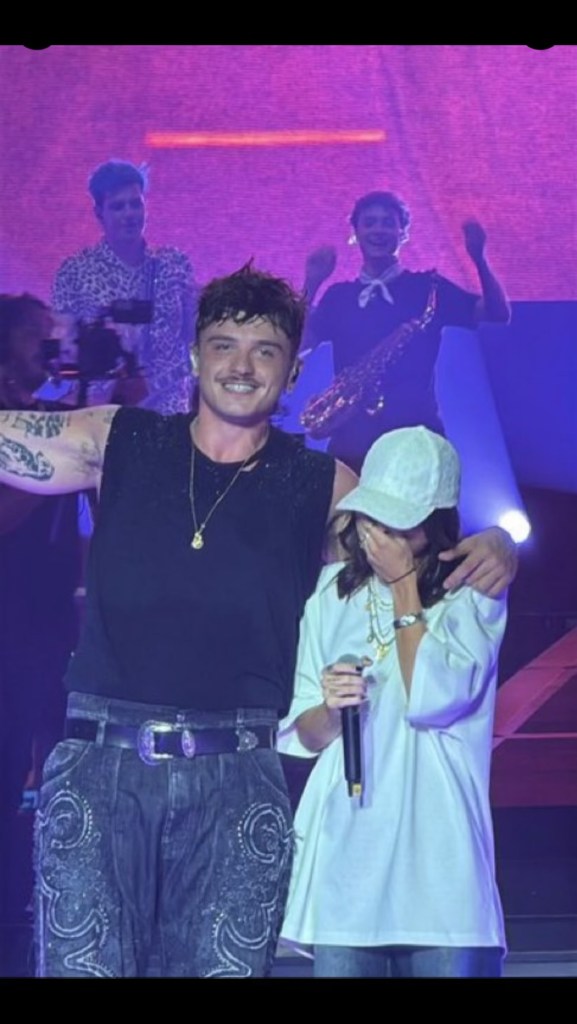
https://youtube.com/@angelinamango_official?si=2z5LDobTU1GOs4XQ

 Music, travel and art